Auction pickup day: a checklist that protects your margin
Winning the lot is the exciting part. Pickup day is the part where the money is quietly kept or quietly lost. A missed deadline can cost a penalty or the lot itself. A vehicle that cannot take the load can get a pickup refused. An item you never checked at the warehouse becomes a refund conversation in your driveway a week later. None of that shows up in the hammer price, it shows up afterwards, in fees, fuel, and stock you cannot sell as described.
So run pickup day as a procedure, not an errand. The steps below follow the order the day actually unfolds: what to confirm before you leave, how to spend your limited checking time at the warehouse, and how to get everything home without surprises at the exit.
Before you leave: payment, deadline, paperwork
Start with the house's own terms, because they are the contract you actually bid under, and they differ by house. One Canadian liquidation house, Liquidation Prime, publishes a typical pattern: orders must be fully paid before pickup, buyers bring their invoice or order details on arrival, and the pickup window is fixed, items bought by Wednesday night must be paid for and collected by Saturday afternoon. Miss that first deadline and the same terms allow a penalty of 10% of the lot purchase price; repeat misses can suspend the account. Read your house's version of those rules before you bid, not after you win.
Three confirmations before any pickup trip:
- Payment confirmed. The order shows paid in the house's system, not just "card sent." Houses can refuse a pickup when payment cannot be confirmed, and arguing at the counter burns your pickup window.
- Deadline and window known. The last day and hour for pickup, written down. Storage-auction guidance makes the same point from the other side of the business: empty what you won by the cleanout date and time printed on the invoice.
- Pickup booked, if the house wants bookings. Platform guidance for auction winners is to contact the seller as soon as the sale ends, schedule the pickup, and ask any questions up front, vehicle access, loading help, gate hours, rather than discovering the answers in the parking lot.
Paperwork is short but non-negotiable: the invoice or order details, and photo ID. Auction platforms tell winners to have both ready to show on arrival. If someone else is collecting for you, ask the house first, some houses reserve the right to refuse third-party pickups when payment verification is required.
The triage rule: how much checking each lot gets
Here is the reality nobody puts in the terms: pickup windows are short, and a big win can mean twenty lots waiting on a pallet. Checking everything to the same depth is impossible, and checking nothing is how dud stock gets home. Experienced pickup practice triages by three factors, how many lots there are, what each one is worth, and what condition it was sold under:
| Situation | Checking depth | What that means on the floor |
|---|---|---|
| Few lots (a handful), any value | Check everything | Open each lot, match contents to the listing photos, power-test anything electric |
| Many lots (a full run) | Deep-check the top-value lots only | The items carrying the run's profit get full checks; small lots get a photo match and a shake-and-sight pass |
| Lot sold as-is | Photo match only | Confirm the item in front of you is the item in the listing; the condition risk was priced into the bid |
| Lot sold as open-box / tested | Full test | The listing promised more, so verify more: power on, accessories present, no swapped contents |
The principle underneath the table: inspection time is a budget, and it gets spent where a surprise would hurt most. A wrong or dead $20 lot is an annoyance. A wrong or dead anchor lot, the one the whole trip's margin rides on, is the run's profit gone. Check in that order, and check while you are still standing in the house's warehouse, where a mismatch can still be raised with staff.
At the warehouse: verify before you load
Verification is a sequence, and the order matters:
- Match the lot to the invoice. Lot numbers first, then contents against the listing photos you saved at bid time.
- Count and sight-check. Quantity differences and swapped contents are easiest to raise before anything leaves the building.
- Run your triage checks. Work the table above, top-value and open-box lots get tested; as-is lots get confirmed, not diagnosed.
- Raise mismatches now, politely, with the listing open on your phone. Remember the backdrop: liquidation sales are final, and stock is sold as-is unless the listing says otherwise. That is exactly why the warehouse floor is the place to spot a wrong lot, after the exit, the item is simply yours.
One safety habit from storage-auction platforms transfers directly: do not hand over large sums until you have verified the location, the goods, and that the sale matches what you bid on. If something looks wrong, stop and talk to staff before loading, not after.
Load-out gear and the exit check
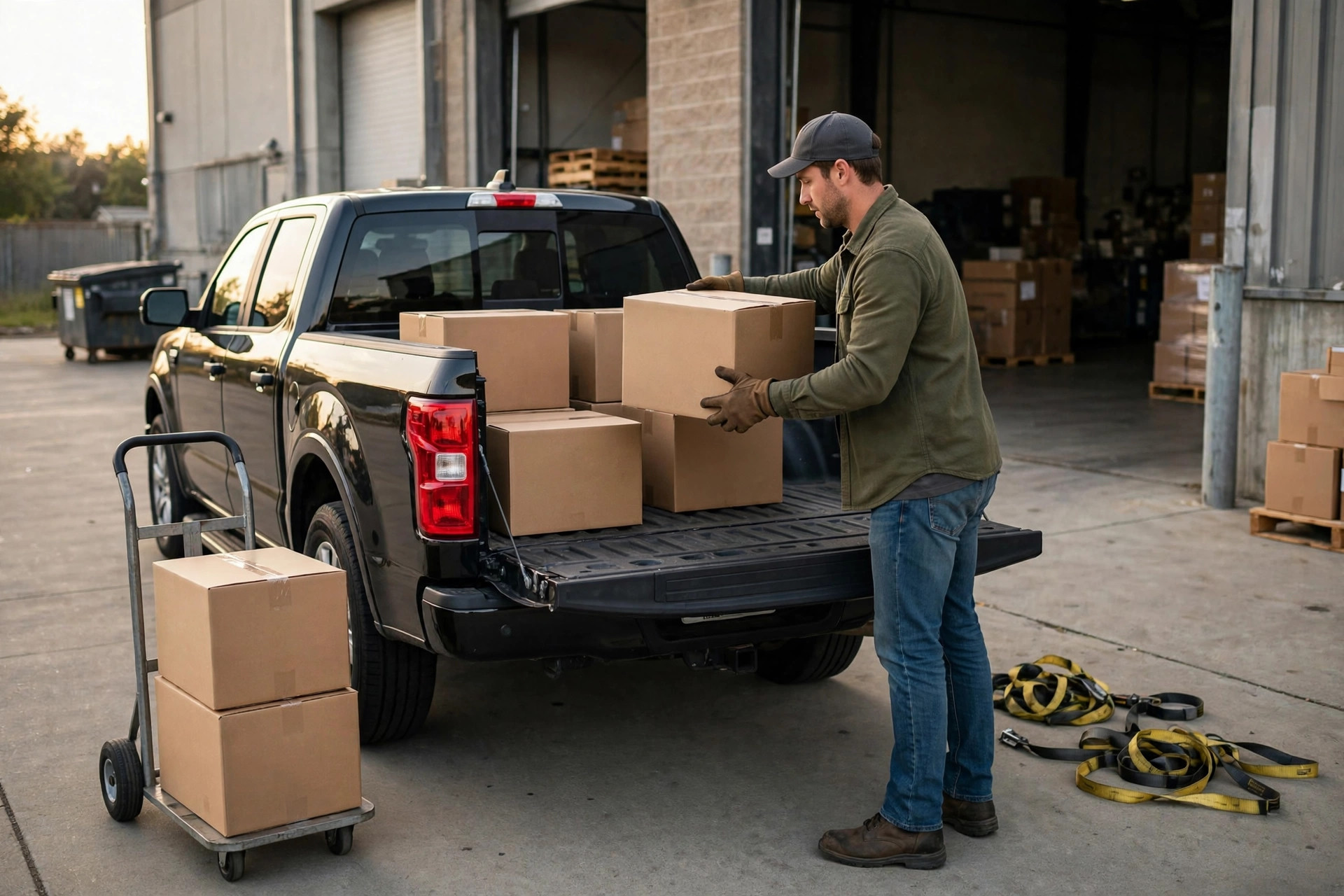
Loading is the last place margin leaks, in damage. One auctioneer's published load-out list is a good packing baseline for the vehicle: a four-wheel dolly, a hand truck, ratchet tie-downs, shrink wrap, bungee cords, and gloves. Add blankets or cardboard for anything with a finish, and load heavy and sturdy first, fragile last and on top.
Two load-out facts to plan around. First, you are the loading crew: houses put the suitable vehicle and the loading help on the buyer, and a pickup can be refused when the vehicle is plainly not up to the load. Second, expect to be checked on the way out, auctioneers commonly verify paid items against the invoice at the exit, and machine loading, where it exists, runs in a queue by buyer number with your paid receipt in hand. Build that wait into the trip rather than promising a buyer a meetup time you cannot keep.
What success looks like: you leave with every lot on the invoice and nothing that is not, each top-value item already tested, the load strapped so nothing shifts, and a phone full of lot photos that become your listing photos and your condition record. Pickup day done right means the only surprises left in the run are good ones.
FAQ
What if I cannot make the pickup window? Call the house before the deadline, not after. Terms vary, but the pattern in published buyer rules is penalties for a first miss and account trouble for repeats, a phone call is always cheaper than either.
Can someone else pick up my lots? Sometimes, but ask first. Some houses refuse third-party pickups when payment needs verifying; arranging it in advance beats sending a friend to be turned away.
Should I test items at home instead? Test the ones that matter at the warehouse if the house allows it. Home testing is for listing preparation; warehouse checking is for catching a wrong or swapped lot while staff can still do something about it.
Is the checking worth the time on cheap lots? Run the triage: cheap as-is lots get a photo match, nothing more. The procedure exists to protect the lots your profit actually depends on.
Money note: this article is general information about buying and reselling auction goods, not financial advice. Auction house terms, fees, deadlines, and penalties differ by house and change over time, always read the current terms of your sale before bidding. Resale results vary and no profit is guaranteed.