Packing fragile flips for shipping without the breakage refund
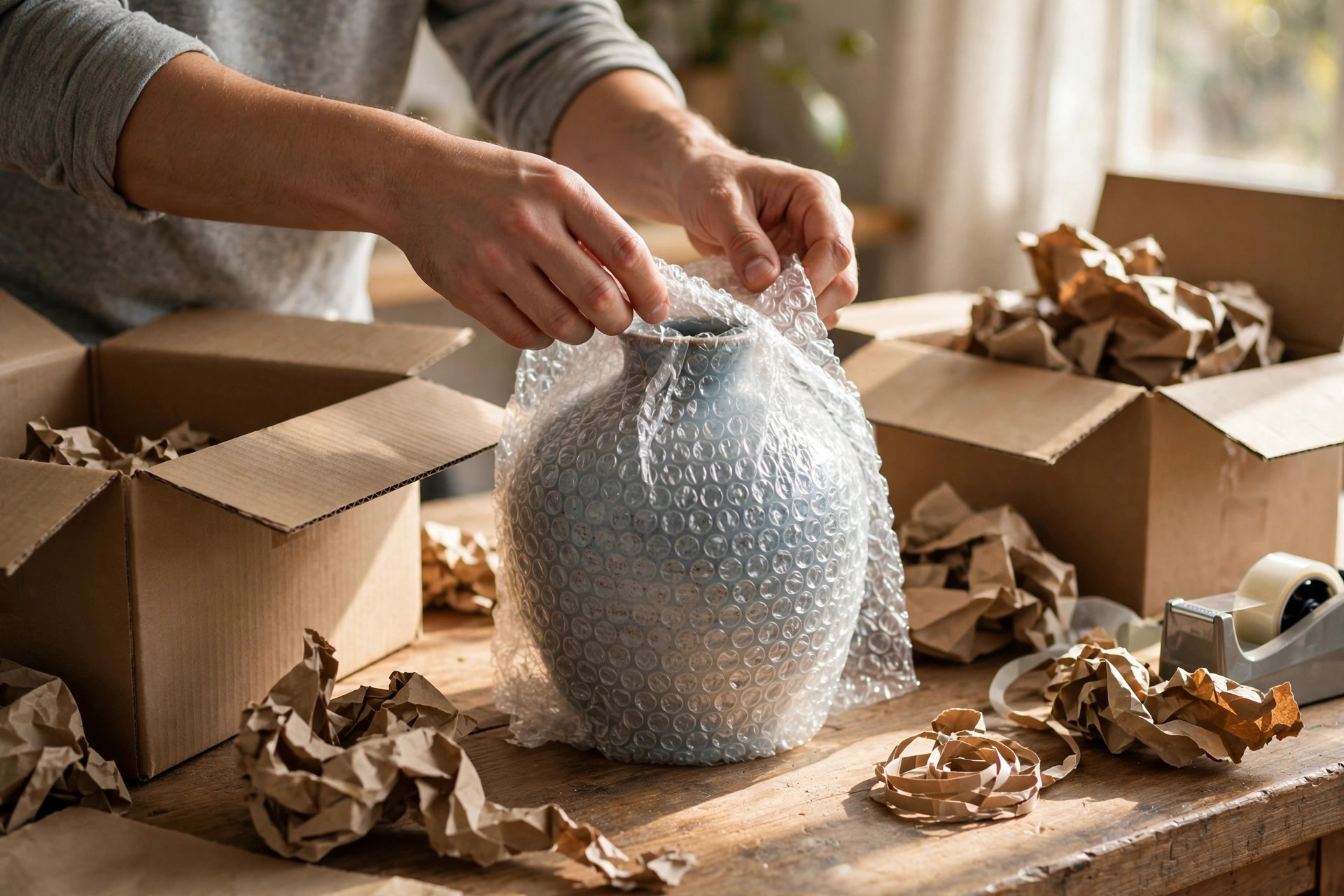
Every flipper who ships eventually opens the same message: "it arrived broken." For a retailer, a breakage is a replacement pulled from a shelf of identical units. For an auction flipper, the item was one of one, there is no replacement, only a refund, a lost item, return postage arguments, and a buyer who will not be back. Packing is the cheapest insurance in the whole resale chain, and fragile liquidation stock is exactly the stock that needs it most.
The mistake is packing by habit, everything in a mailer, or everything drowned in wrap. Both waste money: one in breakages, the other in materials and postage, since carriers price by size and weight as well as distance. Pack to the fragility tier instead.
Fragile is a tier, not a yes-or-no
Carrier guidance draws the lines clearly once you look for them. Canada Post's packaging guide sorts shipping into boxes, protective mailers, and polybags, and states plainly that highly fragile items, like a glass frame, should not travel in a protective mailer alone, and that polybags suit non-fragile items and are a poor choice for anything fragile or sharp. Turned into a bench decision:
| Tier | Typical flips | Packaging |
|---|---|---|
| Sturdy | Hand tools, hard plastic goods, soft goods | Right-sized polybag or mailer; snug fit, no hard corners unprotected |
| Protectable | Books, phone cases, small boxed electronics accessories | Bubble mailer, small, fairly flat items that benefit from a layer of protection, with the item immobilized inside |
| Fragile | Ceramics, glassware, small appliances, electronics | Sturdy box, item wrapped, cushioning on all sides, no movement |
| Highly fragile or high value | Thin glass, framed art with glass, delicate collectibles | Double-box: wrapped item cushioned inside an inner box, inner box cushioned inside an outer box |
The tier is a property of the item, not of your mood or your materials shelf. When in doubt between two tiers, pack to the higher one, the cost difference is small against a full refund on a one-of-one item.
The packing bench: materials that earn their shelf space
A short bench serves almost every flip: sturdy boxes in a few sizes, bubble wrap, packaging paper, proper shipping tape, and a marker for labels. Each earns its place for a sourced reason. Boxes are the carrier's recommended home for large, heavy, and fragile items: durable, stackable, and they give the label a flat surface. Void fillers, bubble wrap, packaging paper, and their kin, exist to stop movement, because items are handled by machines and people and shaken in vehicles; packaging paper does double duty protecting corners and edges, which is where impacts land. And tape means tape designed for shipping. Postal guidance is blunt: masking tape and cellophane tape are not shipping tape, and a box sealed with them is a box waiting to open.
One cost discipline from the same carrier guide: choose the most compact packaging that still ships the item safely. A fragile item rattling in an oversized box is under-protected and over-postaged; the right box is the smallest one that fits the wrapped item plus its cushioning.
The packing procedure, step by step
- Pick the box for the tier. Strong enough to protect the contents, with room left inside for cushioning, a box the item barely fits leaves nowhere for protection to go.
- Prepare the item. Wrap it fully in bubble wrap or paper. Hollow fragile items, vases, glassware, get stuffed with packing material so the walls are supported from inside. Framed pieces with glass get special handling: postal guidance is to remove the glass and wrap it separately from the frame.
- Build the cushion bed, then fill every void. Line the bottom, set the wrapped item in the middle, and fill all remaining space so the item is held in place. The goal from the carrier guides is simple: nothing inside the box can shift in transit.
- Run the shake test. Close the flaps without taping and shake the box firmly, then tilt it each way. Silence and stillness pass. Any sliding, thumping, or rattling fails, open it and add fill until it passes. This ten-second test catches most under-packing before it becomes a refund.
- Seal with shipping tape along the seams, top and bottom.
- Label like a pessimist. Put the delivery and return addresses on one side only, mark the parcel "Fragile" in large print for breakables, and drop an extra address label inside the box, if the outer label is damaged or torn off, the inside one is how the parcel still finds its way. Seller labels need no special equipment: standard printer paper, printed and taped flat to the largest surface, does the job.
What success looks like: the sealed box can be shaken and tilted in silence, the label sits flat and readable on one face, and you could drop the parcel from knee height onto carpet without your stomach dropping with it.
Reused boxes: the flipper's free supply, with rules
Resellers sit on a free box supply, every auction pickup brings more. Carriers allow reused boxes, on conditions: every previous marking, barcode, label, and address comes off (an old barcode is a mis-sort waiting to happen), and the box itself must be undamaged, unripped, and still rigid enough to protect what is inside. A box that has already been crushed once has spent its strength. Run a quick triage at the bench: corners square, flaps stiff, no soft spots, pass, and it ships; fail, and it becomes void fill or recycling, never a fragile item's only protection.
When the honest answer is local-only
Some items should never enter the mail, and recognizing them at listing time is part of packing judgment: the mirror with the hairline crack you disclosed, the thin-glass lamp shade, the ceramic piece with an old repair. If no tier of honest packing makes the trip safe, or the packing and postage would eat the entire margin trying, the item is a local-pickup listing, priced and described that way from the start. A sale you decline to ship is cheaper than a breakage you have to refund, every single time.
FAQ
Is a bubble mailer ever right for glass? Not on its own, carrier guidance is explicit that highly fragile items do not belong in a protective mailer alone. Glass goes in a cushioned box, or it does not go.
Does writing "Fragile" actually help? It is one layer, not the plan. Mark it, postal guidance recommends it for breakables, but pack as if nobody will ever read it. The cushioning is what survives the trip.
How much cushioning is enough? Enough that the shake test passes: the item cannot move in any direction. Movement, not thin padding alone, is what breaks things, an item that cannot shift cannot build up the speed to hurt itself.
What about irregularly shaped items? Box them anyway, with the shape immobilized in fill; marketplace seller help covers packing irregular shapes precisely because odd shapes in bags get caught, bent, and mis-sorted.
Money note: this article is general information about shipping secondhand goods, not financial or business advice. Carrier packaging rules and platform policies change over time, check the current guidance from your carrier and marketplace. Resale results vary and no profit is guaranteed.