Reselling winter sports gear from auctions: what to flip, what to check, what to skip
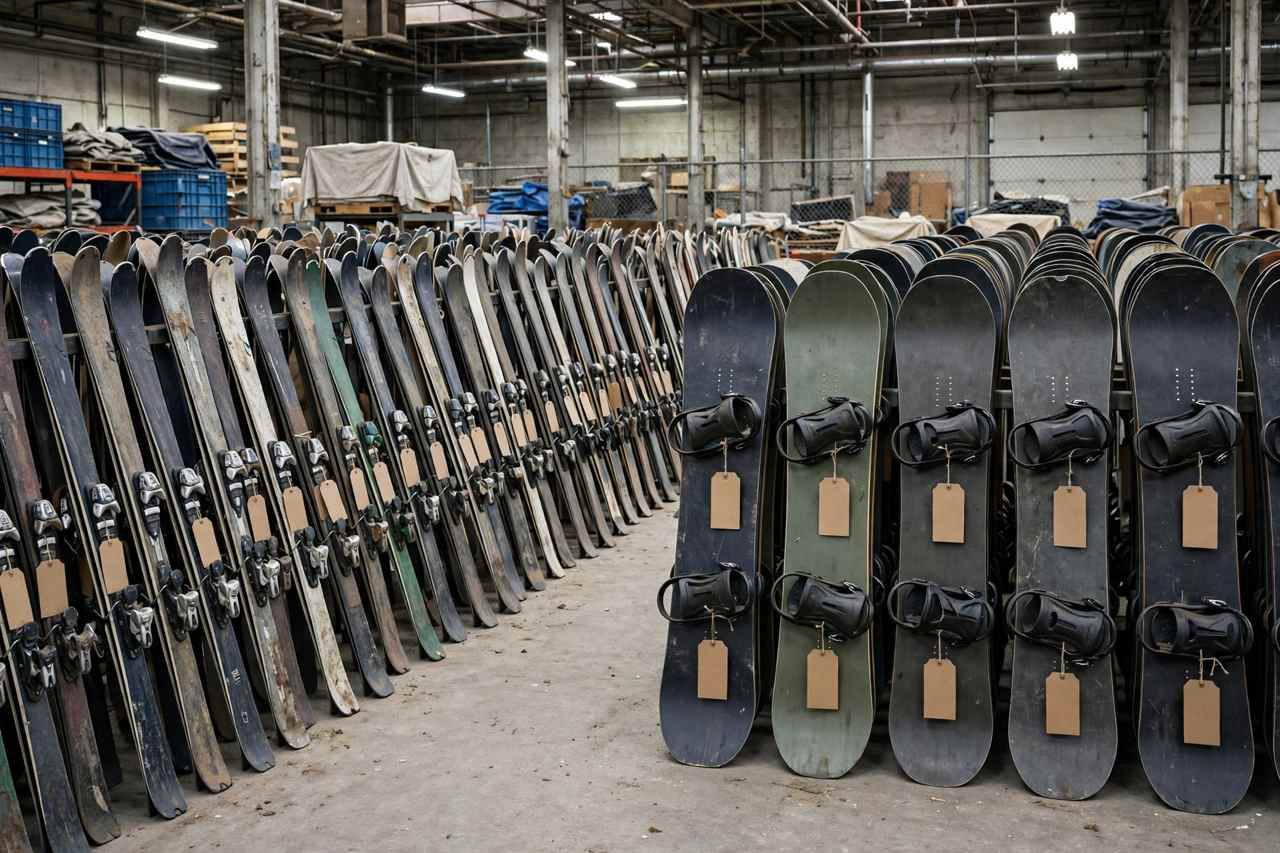
$400 to $600 new, $80 to $200 at auction. That is the documented spread on a pair of resort rental skis after three to five seasons of rental counter life, and it explains why ski and snowboard liquidation lots draw crowds every spring. It does not explain which lots make money. Winter gear punishes lazy inspection harder than most auction categories: the valuable checks are physical, some flaws are structural, and one category in the lot should not be resold at all. Sort first, inspect second, bid last.
Earnings disclaimer: This article is general information about reselling, not financial advice. Resale income varies with sourcing, condition, demand, and time spent. No result described here is a guarantee of profit.
The three buckets, applied to a liquidation lot
| Bucket | Categories | Why |
|---|---|---|
| Flip | Outerwear shells and bibs, clean gloves and mittens, goggles with clean lenses, poles, ski and board bags | Buyers can judge them from measurements and photos; flaws are visible and low risk |
| Check carefully | Skis, snowboards, boots, snowboard bindings and straps | Condition and compatibility decide the value, and some flaws hide until handled |
| Skip | Helmets, avalanche safety equipment, anything with an unknown crash history | Hidden damage matters and safety depends on the item working as designed; one major helmet maker strongly advises against buying or reselling a used helmet at all |
The skip bucket is not a pricing judgement, it is a walk away rule. A helmet with an unknown history cannot be inspected into safety, and a liquidation lot that bundles helmets into an otherwise good gear lot does not make the helmets sellable. Price the lot as if they are worth zero, because to a careful reseller they are.
The inspection runbook, in order
- Edges and bases first. Run a thumb along the edges and read the base under light. Light scratches are cosmetic. Deep gouges, rust, delamination (layers separating), missing edge sections, or exposed core are structural, and structural means the bid drops to parts value or to zero.
- Sidewalls and flex. Cracks or splitting in the sidewall signal structural damage. Compare the pair side by side; a ski or board whose camber no longer matches its mate has lost the spring that makes it ride properly.
- Bindings, handled honestly. Rental bindings are heavy duty units that should click and release smoothly, though some creaking is normal. Then stop. Release settings are set by a certified technician for a specific skier's weight, height, and ability, against a specific boot. Nobody can read the correct setting off a used pair, so the listing says the bindings are untested and unadjusted, and the buyer must have them inspected and set by a certified technician before use. That sentence is not legal decoration; it is the difference between an honest listing and a liability.
- Boots and compatibility. Check liners, buckles, shells, and soles. List the sole type, size, and every marking on the boot, because compatibility is a minefield: alpine touring soles are not compatible with many alpine bindings, GripWalk soles follow their own rules, and junior boots do not belong in adult bindings. Tell buyers to confirm fit with a shop.
- Photograph for the listing while the gear is in hand: base, edges, top sheet, tip and tail, and every flaw found above. A documented scratch costs less than an undisclosed one.
What the resale data actually supports
The cleanest completed sale data retrieved for this guide comes from a European resale platform's 2025/26 season, so read it as a relative signal in euros, not as Canadian pricing. Used skis fetched a median of 280 euros, snowboards 250 euros, and boots 180 euros. Three patterns in that data travel across currencies. Well kept gear brought about a third of its original retail price. Condition was the biggest lever a seller controls: skis in very good condition fetched a median about 70 percent more than acceptable ones. And snowboards moved faster than skis, a median 17 days to sell against 23. The original box, notably, added nothing.
Set against the auction side, the shape of the trade is visible. A rental pair bought inside the documented $80 to $200 auction range, in genuinely very good condition, sold into a market that pays roughly a third of retail for well kept gear, has room in it. The same pair in acceptable condition, with the 70 percent condition penalty applied, mostly does not. Condition grading at the preview table is the whole business model in this category, which is why the runbook above comes before any bid.
Costs, timing, and the kill criterion
Price the whole route before bidding: hammer plus the house's fees and tax, the pickup trip, any base repair or edge work you will actually pay for, platform fees on the sale, and the storage the gear will occupy. Bulky gear is expensive to ship, so local sale is the default route and shipping is the exception that needs its own math. Timing matters twice. Supply peaks when resorts liquidate after the season, roughly March through May, which is when auction prices soften; demand peaks in the autumn, when buyers are gearing up. Buying the spring glut to sell into autumn demand means carrying bulky inventory for months, and finite storage is a real cost: cash flow beats big margins, and $500 tied up for months in slow, bulky stock loses to faster, smaller wins. The kill criterion: any winter lot still unsold at the end of its first full selling season gets one price cut to clear, then bundled or donated out of the rack. Gear that survives two seasons of listings is not inventory, it is furniture.
— Sterling Cole, Money Writer — Earning Desk